

















There’s a version of this review that writes itself: Hynix A-die, CL30 timings, 6000MT/s, EXPO works first try, done. But the DDR5 market in 2025 and into 2026 has made buying 64GB of anything a genuinely painful decision, and the XPG Lancer RGB 64GB kit lands right in the middle of that mess. The 32GB Lancer has always been a sensible buy when priced reasonably — ADATA’s build quality is consistent, the RGB implementation is one of the cleaner ones in the market, and the Hynix A-die underneath has solid overclocking legs. Scaling that up to 64GB via two 32GB dual-rank modules is a different proposition, and the pricing reality right now makes it hard to recommend without a serious caveat.
So let’s talk about what this kit actually is, what it does, and whether the 64GB capacity justifies the premium over just grabbing a 32GB or 48GB kit.
| Spec | Detail |
|---|---|
| Capacity | 64GB (2 × 32GB) |
| Type | DDR5, Unbuffered, Dual Channel |
| EXPO Speed | 6000MT/s |
| XMP Speed | 6000MT/s |
| Timings (EXPO/XMP) | CL30-40-40-76 |
| Voltage (EXPO/XMP) | 1.40V |
| SPD Speed (Default) | 4800MT/s |
| SPD Voltage | 1.10V |
| IC | SK Hynix A-die (dual-rank) |
| Rank | Dual-rank |
| Warranty | Limited Lifetime |
| RGB | Yes, top light bar (XPG Prime / motherboard sync) |
| Dimensions | 133.35 × 43.56 × 8mm |
Design & Build: Familiar, and That’s Fine
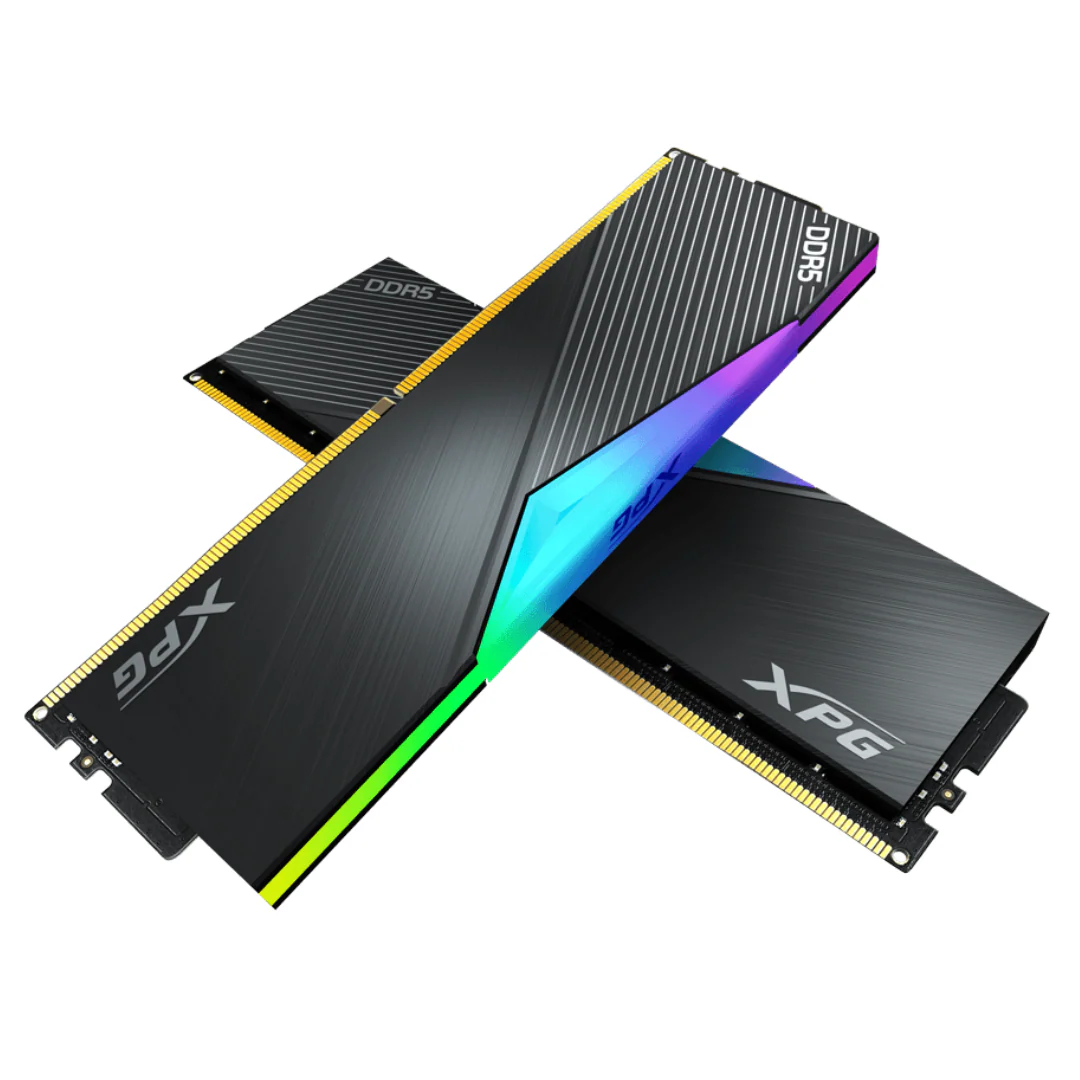
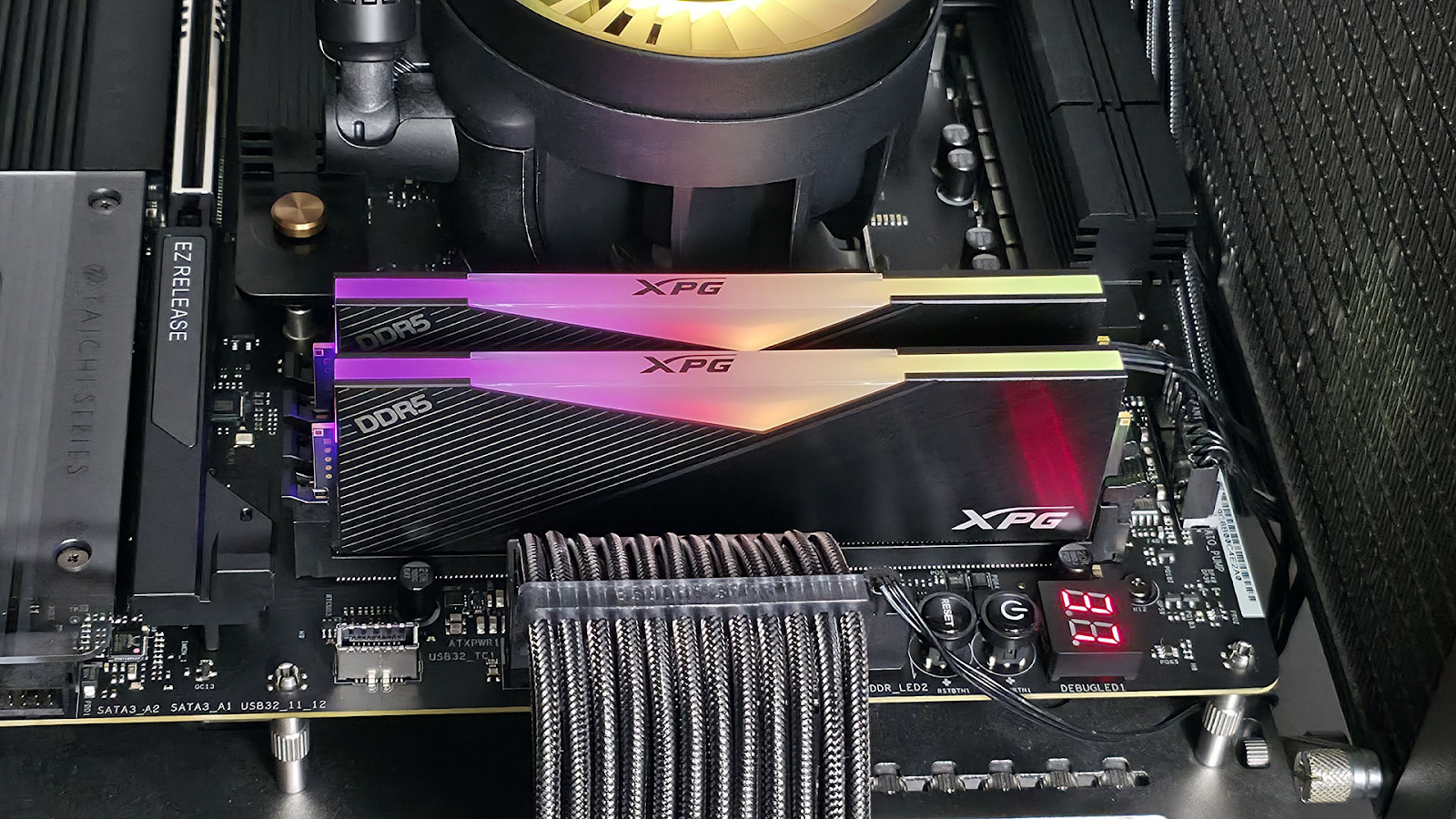
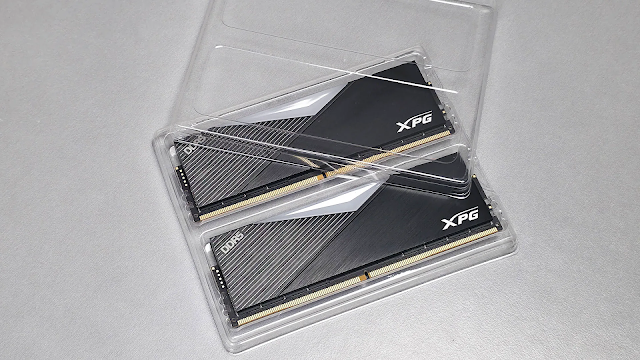
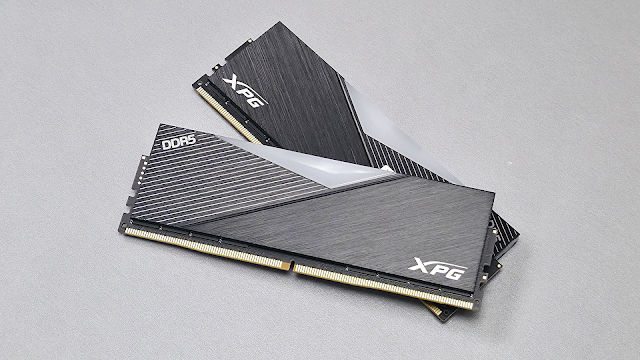
The XPG Lancer has been around long enough that the design language is recognizable at a glance — angular aluminum heat spreader, a frosted RGB light bar running the full length of the top edge, and a reasonably low profile at 43.56mm tall. It’s available in black and Blizzard White, and both look clean in a windowed build. The heat spreader uses a self-adhesive thermal pad that makes direct contact with the ICs and the PMIC in the center, with the aluminum dissipating heat passively. It’s a functional design rather than a flashy one, and the thermal management is adequate — these modules don’t run hot under normal use.
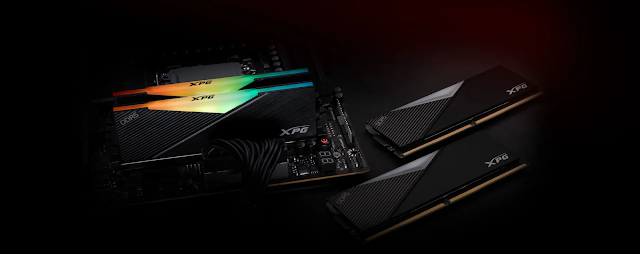
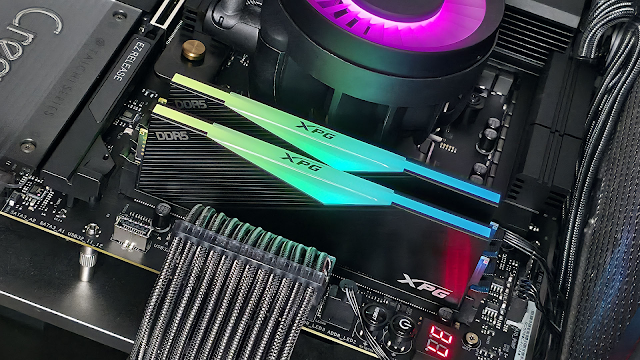
The RGB is a strong point. ADATA uses a diffuser strip that genuinely hides the individual LED positions, so you get a smooth, even glow rather than the spotty look you see on cheaper kits. Compatibility with ASRock Polychrome, ASUS Aura Sync, Gigabyte RGB Fusion, and MSI Mystic Light is confirmed, and the XPG Prime software handles it if you prefer to manage it independently. On my AM5 test bench with an ASRock board, the sync worked without any additional configuration.
The physical construction feels solid. The PCB is full-length, the heatspreader doesn’t rattle or flex, and the modules seat firmly without requiring excessive force. Nothing revelatory here — ADATA has been building DDR5 since the format launched, and the manufacturing quality reflects that experience.
Performance: Where 6000MT/s and CL30 Actually Land
EXPO Stability and Timings
The first thing worth establishing: EXPO activated without issue across multiple AM5 boards, including ASRock X870E Taichi Creator and Gigabyte X870E variants. The kit runs at a 1:1 MCLK:UCLK ratio at 6000MT/s out of the box, which is exactly what you want on Ryzen — the Infinity Fabric runs synchronously, and that synchronous ratio is where AMD’s architecture delivers its best latency characteristics. For Ryzen 7 9800X3D users specifically, this is the target operating point.
Secondary and tertiary timings tighten up reasonably well from the EXPO baseline, and there’s room to manually optimize further if you’re willing to spend time in BIOS. The kit passed extended AIDA64 stability testing without errors.
Synthetic and Productivity Benchmarks
In AIDA64 memory bandwidth testing, the 6000MT/s CL30 dual-rank configuration performs predictably — bandwidth scales with frequency, and the dual-rank configuration gives a small edge over single-rank alternatives at the same speed. Compared to the 6400MT/s version of the same Lancer kit, the gap in raw bandwidth is measurable but not large in absolute terms. Cinebench 2024 multi-core shows essentially the same story: the difference between 6000 and 6400 is within a few percentage points, and neither is going to bottleneck a Ryzen 7 9800X3D in a CPU-bound workload. Per KitGuru’s testing, overclocking the same Hynix A-die kit from DDR5-6000 to DDR5-7200 lifted Cinebench 2024 multi-core scores noticeably — close to G.Skill’s DDR5-8000 kit — which tells you there’s genuine headroom in the silicon.
Gaming Performance
Gaming results across Assassin’s Creed Shadows, Black Myth: Wukong, Cyberpunk 2077, and Monster Hunter Wilds show the expected pattern: at 1440p and 4K with a GPU-bound scenario, memory speed differences are minimal and often within margin of error. At 1080p in CPU-bound conditions, the gap between DDR5-4800 (stock SPD) and DDR5-6000 EXPO is real and worth caring about — particularly in 1% lows. The difference between 6000MT/s and 6400MT/s in gaming, however, is typically 1 FPS or less on average, which is where the question of capacity versus speed becomes relevant. If you’re at 64GB because you need 64GB, the 6000MT/s CL30 kit is not leaving meaningful performance on the table compared to the 6400MT/s variant.
The 1% low improvement from enabling EXPO versus leaving memory at stock SPD settings is the more important takeaway. Per KitGuru’s game testing with a Ryzen 7 9800X3D setup, Total War Pharaoh at 1080p showed the largest delta — enabling EXPO delivered a substantial 1% low improvement over stock 4800MT/s, while manual overclocking to 7200MT/s added another 4fps to 1% lows on top of that.
Test Setup
Testing was validated on my AM5 bench — paired with a flagship GPU, a PCIe 5.0 NVMe boot drive, and the latest Windows 11 build. Benchmarks included AIDA64 Cache & Memory, Cinebench 2024, Blender 4.5, PCMark 10 Applications, 3DMark Time Spy / Port Royal / Steel Nomad, and a gaming suite including Cyberpunk 2077, Black Myth: Wukong, Assassin’s Creed Shadows, and Monster Hunter Wilds — all at 1080p with demanding presets to keep scenarios memory-sensitive.
Overclocking: Hynix A-Die Does What It Does
The Hynix A-die IC in this kit has a well-documented overclocking profile at this point. The 6000MT/s CL30 version pushed to 7400MT/s CL34-45-45-98 at approximately 1.45V on an ASRock X870E Taichi OCF board — one step higher than the 6400MT/s Lancer kit managed in the same conditions, which suggests the 6000MT/s modules drew slightly better silicon. That’s not unusual; lower-binned speed grades sometimes contain ICs that binned conservatively.
The practical ceiling for most users without extreme cooling is in the 7200~7400MT/s range at 1.45V. Going beyond 1.50V for daily use isn’t something I’d recommend — the thermal and stability tradeoffs aren’t worth the marginal gains in anything except competitive benchmark chasing. KitGuru’s testing with the same IC confirmed DDR5-6800 to DDR5-7200 as a “rock solid” daily-drive range, with DDR5-7600 feeling within reach on a good board.
Temperatures at 1.40V EXPO are well within acceptable limits — the aluminum spreader handles the modest thermal output without issue, and no active cooling is needed.
| Rival | Comparison | Verdict |
|---|---|---|
| G.Skill Trident Z5 Royal RGB 64GB DDR5-6400 CL32 | Higher speed, looser CAS (CL32 vs CL30), premium aesthetics, similar Hynix A-die | True latency is close; XPG edges it in CAS, Z5 Royal wins on clock speed. Price premium for G.Skill is real and often not justified by performance delta. |
| Kingston FURY Renegade RGB 96GB DDR5-6400 CL32 | More capacity, higher speed, single-rank 48GB modules, higher price | A different product for workstation/content creation use. Gaming performance advantage over 64GB is negligible; 96GB is overkill for gaming. |
| Essencore KLEVV URBANE V RGB 48GB DDR5-6000 CL30 | Less capacity, single-rank, similar frequency and CAS | Single-rank shows lower bandwidth in AIDA64 and loses in most memory-sensitive tests. 48GB is the sweet spot for most users if 64GB isn’t needed. |
| Corsair Vengeance RGB 64GB DDR5-6000 CL30 | Near-identical specs, similar Hynix A-die, different aesthetic | Performance parity expected; comes down to aesthetics, software preference, and current pricing. |
The Verdict: 7.5/10
The ADATA XPG Lancer RGB 64GB DDR5-6000 CL30 is a technically sound kit. The Hynix A-die delivers what it’s supposed to, EXPO works cleanly on AMD’s AM5 platform, the RGB is genuinely well-implemented, and the overclocking headroom is there if you want it. None of that is in question.
The problem is the 64GB price tag. At over $1,000 for the 64GB configuration at current market rates — inflated by AI hardware demand driving up NAND and DRAM supply constraints — this kit asks a lot. The 32GB and 48GB versions of the Lancer make far more sense for most gaming builds, and the performance difference between 6000MT/s CL30 and 6400MT/s CL32 in gaming is too small to spend time worrying about. If you genuinely need 64GB — content creation, heavy virtualization, large dataset work alongside gaming — this kit is one of the better options in that tier. But it’s not a casual purchase right now.
Pros
- EXPO activates first try, runs 1:1 MCLK:UCLK on AM5 out of the box
- Dual-rank 32GB modules — better bandwidth than single-rank alternatives at same capacity
- Hynix A-die overclocks well, 7200~7400MT/s achievable at 1.45V
- RGB diffuser hides LED positions cleanly — one of the better implementations at this price tier
- Broad motherboard compatibility (ASRock, ASUS, Gigabyte, MSI confirmed)
- Limited lifetime warranty
Cons
- 64GB pricing is brutal at current market rates (north of $1,000)
- Performance gap over 6400MT/s version is minimal in gaming — hard to justify the step down in speed for the same money
- No fan, no active cooling — fine for stock use, but sustained overclocking in poor airflow cases needs attention
- Design is functional but not distinctive — looks nearly identical to G.Skill Z5 Neo at a glance
Who Should Buy / Who Should Skip
This is for you if
you’re building a high-end AMD Ryzen workstation or content creation rig that genuinely needs 64GB of fast DDR5, you want EXPO plug-and-play reliability, and you’re not interested in spending even more on G.Skill’s premium aesthetic tier for the same underlying performance. Also a solid pick if you’re an overclocker who wants Hynix A-die at 6000MT/s and plans to push it well past rated speed.
Look elsewhere if
you’re building a pure gaming rig. 32GB DDR5-6000 CL30 or a 48GB kit will serve you just as well in every game available today, at a fraction of the cost. The 64GB capacity is a meaningful upgrade for specific workflows — for gaming alone in 2026, it’s not necessary.