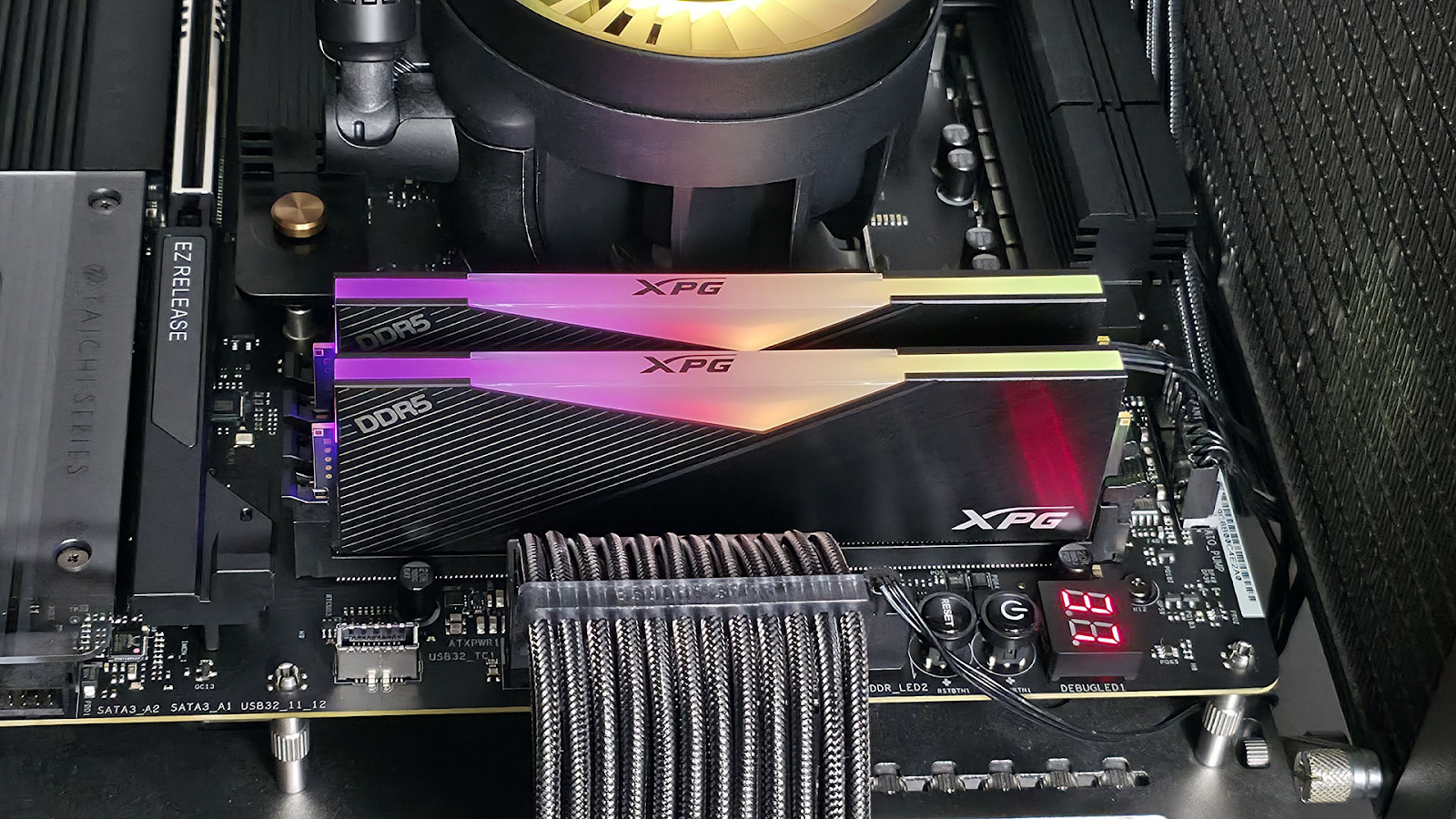



















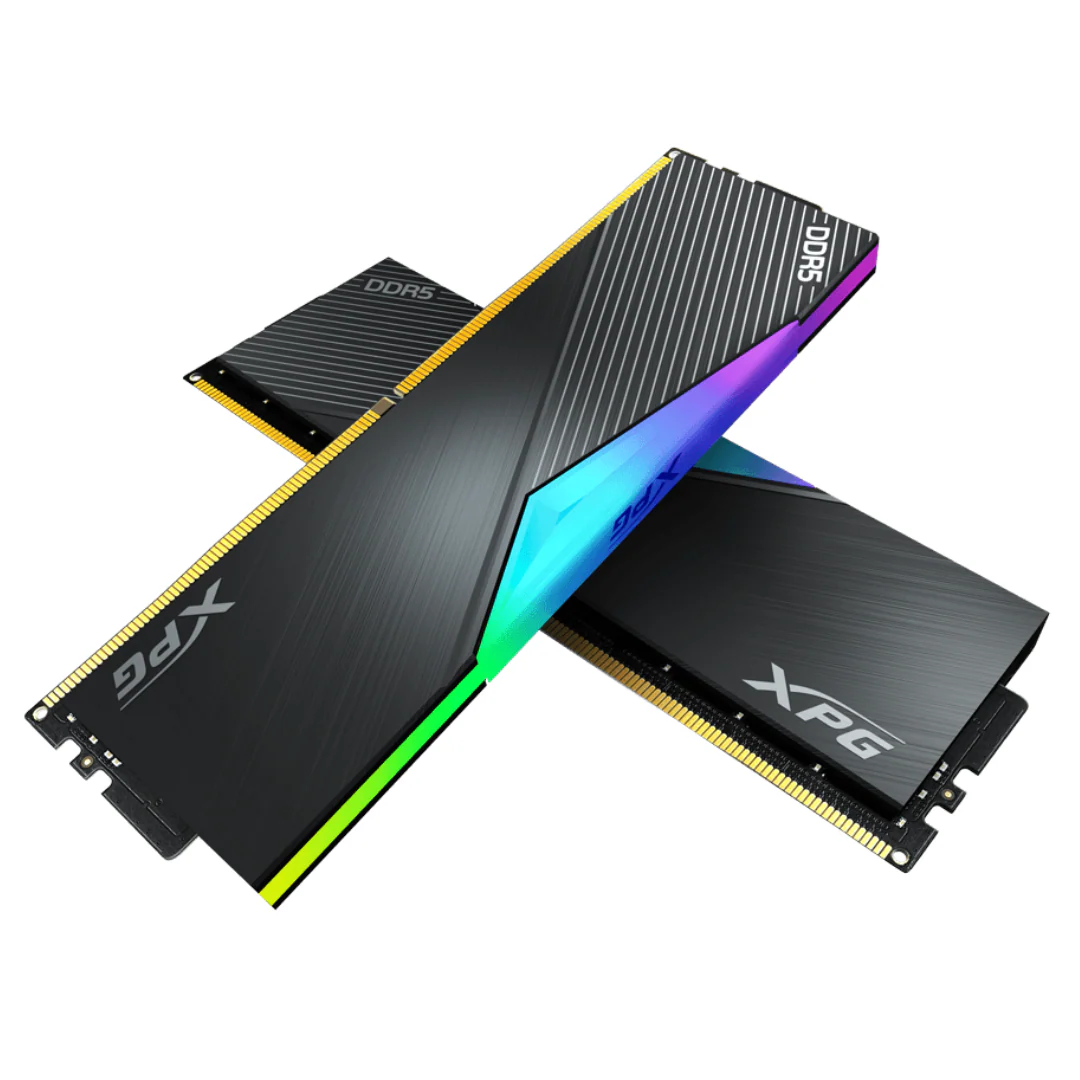

The ADATA XPG LANCER RGB 64GB DDR5-6400 CL32 kit positions itself as a mainstream high-performance DDR5 option aimed at gamers and overclockers who want a balance of speed, stability, and RGB flair. This article rephrases and reorganizes the original review’s findings into a fresh English narrative while preserving the same depth of coverage on features, test methodology, benchmark results, and practical recommendations.
Design and Key Features
Aesthetic and Lighting
The LANCER RGB modules are offered in both standard black and a “blizzard white” finish to suit different build themes. Each module features a full-length RGB light bar across the top that integrates with major motherboard RGB ecosystems and can also be controlled via ADATA’s XPG Prime software for synchronized lighting across compatible XPG components.
Power Management and Reliability
These DDR5 modules include an on-module PMIC to improve power delivery and efficiency compared with older DDR4 designs. They also implement on-die ECC to correct single-bit errors in real time, which enhances long-term stability for sustained workloads. The kit is marketed as compatible with both Intel XMP 3.0 and AMD EXPO profiles, simplifying setup for users on either platform.
Target Audience
ADATA positions the LANCER series as a gamer- and overclocker-friendly product line that aims to deliver solid out-of-box performance while offering headroom for enthusiasts who want to push frequencies higher. The product messaging emphasizes value and broad motherboard compatibility.
Technical Specifications
Module Configuration
- Capacity: 64GB kit (2 × 32GB)
- Rated Speed: DDR5-6400 MT/s
- Timings: CL32-39-39-89
- Rated Voltage: 1.40 V (SPD default 1.10 V)
- ICs: Hynix A-die (dual-rank modules)
- Profiles: AMD EXPO and Intel XMP 3.0 ready
- Warranty: Limited lifetime warranty
These specifications reflect ADATA’s design choices for a high-capacity, high-frequency kit optimized for modern Ryzen and Intel platforms. The use of Hynix A-die and a dual-rank layout is intended to balance capacity with overclocking potential.
Packaging and Installation
Retail Presentation
The kit ships in a compact retail box containing the two memory modules and minimal printed materials; software and detailed documentation are available online. The packaging follows XPG’s gaming-oriented visual language and matches other products in the XPG ecosystem.
Ease of Installation
Installation is straightforward: the modules fit standard DDR5 DIMM slots and the EXPO/XMP profiles can be loaded from BIOS for immediate use. ADATA’s compatibility testing with major motherboard vendors means most users should experience a plug-and-play setup without manual timing adjustments.
Performance Summary and Benchmarks
Test Platforms and Methodology
The review’s testbed included both Intel and AMD systems to show cross-platform behavior, with benchmarks spanning synthetic memory tests, productivity workloads, and modern game titles. Benchmarks used include AIDA64 memory and cache tests, Blender, Cinebench, PCMark 10 application workloads, and several 3DMark and in-game scenarios to capture real-world performance.
Synthetic and Productivity Results
In AIDA64 memory and cache tests the kit scales predictably with frequency, and latency measurements landed in the mid‑70 ns range on the AMD test platform used in the review. In multi-threaded rendering workloads such as Blender and Cinebench, the 6400 MT/s configuration delivered top-tier results among the tested kits, showing that the kit is well-suited for content creation as well as gaming.
Gaming and 3D Benchmarks
Across 3DMark Time Spy and Port Royal, and in titles like Assassin’s Creed Shadows, Black Myth Wukong, Cyberpunk 2077, and Monster Hunter Wilds, the differences between high-quality DDR5 kits narrowed. The review found that EXPO at 6400 MT/s often provided the best balance of performance and stability, with overclocked results (e.g., 7200 MT/s) offering only modest gains in many game scenarios. In a few titles that are more memory-sensitive, higher frequencies translated to a few extra frames per second, but the practical uplift was generally small.
Overclocking, Temperatures, and Practical Advice
Overclocking Headroom
The LANCER kit demonstrated headroom beyond its rated 6400 MT/s; the review reports stable operation up to around 7200 MT/s at roughly 1.45 V in their test environment. However, long-term daily use at elevated voltages is not recommended; the reviewer suggests keeping voltages at or below 1.45 V for sustained reliability unless you have advanced cooling and are pursuing competitive overclocking.
Thermal Behavior
Temperatures remained well within safe limits during testing, and the stock heatspreader design proved adequate for both rated operation and moderate overclocking. Extreme overclocking would benefit from improved case airflow or direct cooling solutions.
Stability Notes
XMP/EXPO profiles passed AIDA64 stability tests in the review, and the modules showed consistent behavior across multiple motherboards. For AMD systems, the review highlights that certain IMC ratios and platform-specific tuning can influence the best achievable frequency and latency balance.
Conclusion and Recommendation
The ADATA XPG LANCER RGB 64GB DDR5-6400 CL32 kit is a polished, high-capacity DDR5 option that blends attractive RGB styling with solid out-of-box performance and reasonable overclocking potential. It is particularly well-suited to users who want a 64GB dual‑rank kit that works reliably on modern AMD and Intel platforms while offering easy configuration through EXPO or XMP profiles. The review notes that pricing for 64GB DDR5 kits remains high and volatile, which affects value comparisons, but it still recognizes the LANCER as a strong contender in the gaming and enthusiast memory segment.
If you’d like, I can extract the key benchmark numbers and present them in a compact comparison table for quick reference.